May 21, 2026
4 Small Businesses, 4 Q2 Launches: How Print + Ship Actually Plays Out
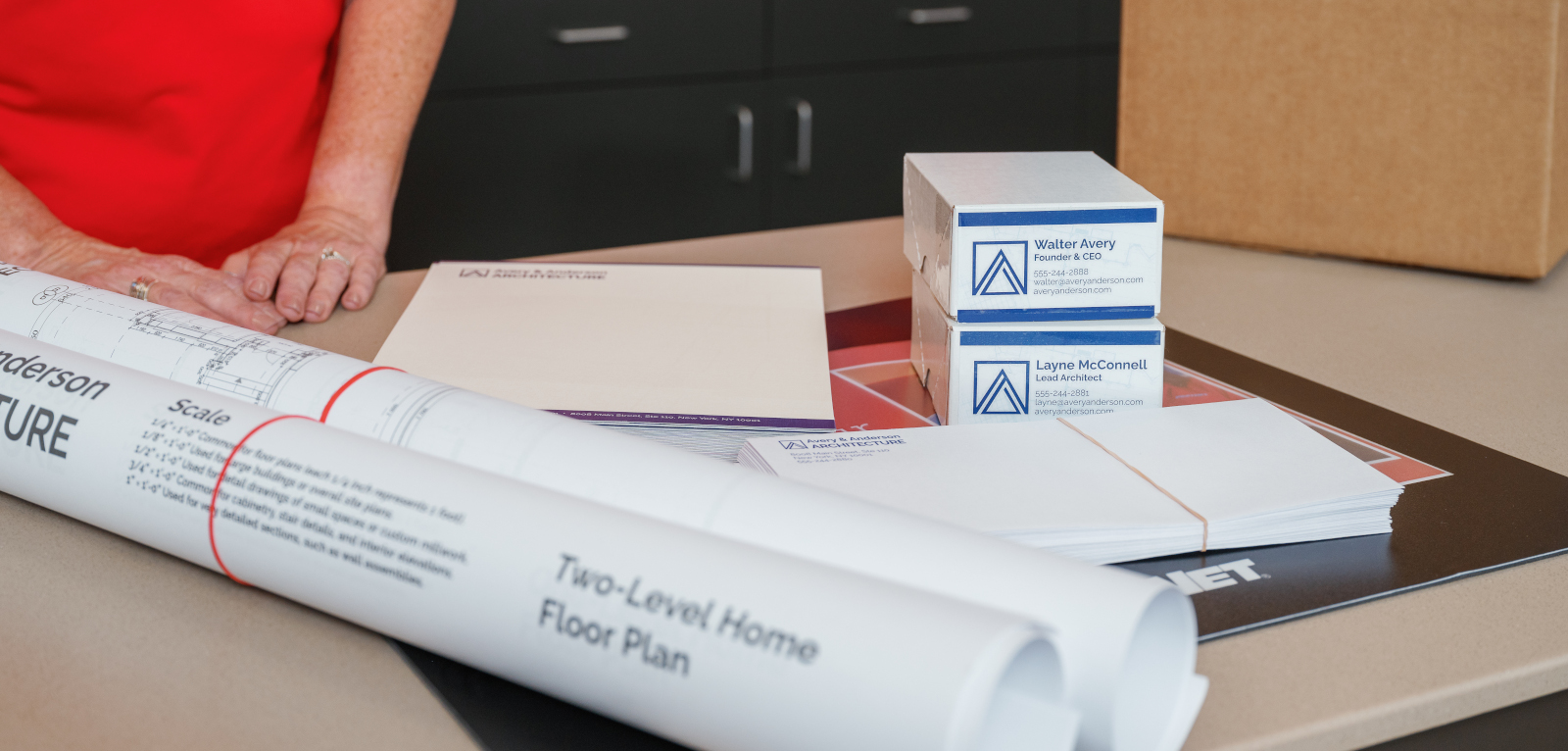

A note on these stories: these are illustrative composites, drawn from the kinds of small-business launches we see at the counter every quarter. Names and details are stitched together from many real conversations. The patterns, though, are real.
Q2 is launch season for a lot of small businesses. The weather turns, the events ramp, the holiday shopping pull-forward starts to show up in fulfillment, and the planning that happened in February finally hits the street. We see the launches up close because they almost all run through print, ship, or both. Here are four of them.
A small skincare brand we’ll call M.O. opened pre-orders in late April with a launch date of May 5. The owner — running the business out of a garage and a kitchen — knew how to make the product, but the shipping part terrified her. She’d planned for “maybe 100” first-day orders. She got 487.
What worked: the pre-launch decisions she made before she needed them. She had her packaging printed and stored a month early — branded mailers, branded thank-you cards, and a small printed insert with reorder instructions. She had a local PostNet running the multi-carrier comparison on every shipment, which meant 60% of orders went USPS, 30% UPS, and 10% FedEx based on weight and destination. She was on a pace she could not have hit if she’d been gluing labels at her kitchen table.
What we took from it: the print is the part you don’t think about until it’s too late. Owners who win the launch have the boxes, the cards, the inserts, and the labels ready before the launch date — not in the panic week after.
A regional arts nonprofit, hosting an annual fundraising gala, came in three weeks before the event with a problem they’d had every year: the printed invitation went out too late, the response rate dragged, and they ended up overspending on last-minute digital ads to fill seats.
What changed: they ran a real direct-mail invitation 21 days before the event — not 10. They printed on heavier card stock so the invitation felt like an event, not an envelope. They mailed in a single Tuesday drop. RSVPs came back at almost double the prior year’s pace, and they stopped buying digital backup ads halfway through the campaign because they didn’t need them.
What we took from it: timing is a feature of the print, not a side effect. A direct mail piece that arrives 21 days early outperforms a beautiful one that arrives 10 days early. The cost is the same. The result is not.
A residential service business — siding, roofing, decks — had been running the same Facebook ads for two years with diminishing returns. The owner came in for a business-card refresh and ended up rethinking the front of the business. The unlock turned out to be a physical-marketing refresh.
What worked: deliberately simple design across three pieces — phone number, service category, neighborhood feel, readable from across the street. Yard signs refreshed at every active job site. 1,000 door hangers tied to homes within a 30-house radius of each completed job. A clean banner for the home-show booth he’d been skipping. Eight weeks later, inbound calls were up 47%. Ad spend hadn’t changed.
What we took from it: the most underrated piece of small-business print is the thing already in the neighborhood. A yard sign at a job site, a door hanger on a porch, a banner at an event — these earn impressions every day, for years, with no recurring cost. If your digital is plateauing, the cheapest test is to refresh the physical.
A home-baker who’d been growing on Instagram decided to test a brick-and-mortar pop-up over Memorial Day weekend at a local market. She had three weeks. She had no signage, no menu cards, no business cards, no packaging, and no direct-mail piece for the neighbors. She walked into her local PostNet on a Wednesday with a Pinterest board and a hand-drawn logo.
What got built: a printed menu (in two sizes, one for the table and one for takeaway), 200 business cards, a foam-core sign for the table, custom-printed pastry boxes in two sizes, and a 150-piece postcard mailing to homes within a quarter-mile of the market. Total spend across the package: about $640. The pop-up sold out by Saturday afternoon.
What we took from it: small businesses launching for the first time often think they need fewer things than they actually do — and they think the things cost more than they actually do. The reality is the opposite on both.
Different industries, different ticket sizes, different audiences — but the same arc. Each owner planned the print and the ship before they planned the launch date. Each one used a small number of pieces, done well, instead of a large number of pieces, done in a hurry. Each one used a local PostNet as a single point of help instead of stitching together five vendors.
Q2 launches are a season for small businesses. They’re also a season for the small mistakes that turn a great launch into a hard one. The owners who do it well aren’t the ones with the biggest budgets. They’re the ones who started early, picked a few right things, and had someone in their corner who’d done it before.
Got a launch on your calendar this quarter? Stop in at PostNet for a free consultation. We’ll walk through your timeline and tell you what to handle now versus later.


 Back to Top


